How to Choose the Right Crabapple Tree

I always tell my customers that the three main criteria that you should consider when choosing the right crabapple tree for your yard is flower color, berry retention, and disease resistance. You may find a cultivar that you like based solely on the color of its flower, but if you don’t consider all facets of my three criteria, you may just end up with an unhealthy tree   that lacks winter interest.

Purple_prince_crabapple_tree –.jpg

Flower Color

Flowering crabapples are known for the high impact of their flowers. They generally flower in May before the lilacs, and the flowers last for 1 1/2- 2 weeks. Crabapple trees come in an assortment of different colors and can provide a beautiful way to accentuate certain parts of your yard. You can find cultivars that flower in a variety of shades, ranging from red, orange, purple, and white. It’s up to you to decide what splash of color you’d like to add to your landscaping, but remember that it’s important to pick a tree based on more than just the aesthetic appeal that their flowers provide.

Berry Retention

If you would like a flowering crabapple but do not want berries, there are sterile varieties.  However, the flowers usually only last 1 1/2 - 2 weeks while the berries can last a lot longer and provide another level of winter interest. The fruits of some crabapples begin to color in August and others don’t begin to color until September. Additionally, some cultivars drop their ripened fruit while others hold their fruit until spring, which provides a great way for you to attract migrating birds to your yard.

Disease Resistance

Flowers for crabapples are generally all great.  Berry retention is important, but choosing a healthy, disease resistant variety is of greater importance. Different plants will stand up to diseases in different ways. When picking your plant, I’d highly recommend paying close attention to their respective abilities to resist common diseases, such as Apple Scab, Fire blight, and Cedar Apple Rust.

Here’s a list of some of my favorite cultivars and their respective colors and capabilities when it comes to berry retention and disease resistance.

 
1.jpg
 

Your Lawn: To Roll or Not To Roll

Often customers who want to remove bumps or ups and downs in their yards ask me about rolling their lawn. The assumption is that rolling lawns will achieve a more even and level yard space. However, this is not true. In reality, rolling your lawn will cause more issues than it will solve.

Lawn roller.jpg

Rather than flattening out your yard, all rolling does is compact the top level of soil creating much harder layers of soil for grass to grow. Soil has a structure comprised of small particles with pockets of air space in between. If you roll your lawn, you are essentially removing the air space and pushing the particles tightly together. Those pockets of space are necessary if you want to maintain a healthy lawn. Without air space, water will not infiltrate the soil properly causing lawns to brown out to dormancy quicker during periods of drought.  Additionally, if your lawn doesn’t have enough air space to allow proper circulation during wet periods, it can lead to waterlogged roots that will eventually decompose. The most obvious necessity for empty space in your soil is that you need enough space for new roots to grow.

Furthermore, your soil needs enough space to allow oxygen to pass through. I often get asked questions about tree roots coming to the surface in lawn areas. Sometimes this is the nature of the tree; like with honeylocust. However, trees that do not typically grow this way will send roots to the surface if they cannot exchange enough oxygen in the soil.

What are alternatives to lawn rolling?  The easiest way is adding soil to the low areas or shaving down high spots.  You must be careful not to disrupt the drainage pattern of your yard.

If you are interested in discussing this further please feel free to contact me.

My guest said, “Funny, there are no mosquitos tonight.”

Whether you’re hosting a barbecue or just relaxing on your patio, the summer season has always been the best time to get out of the house and enjoy the outdoors. Needless to say, most of us would much rather enjoy this time with our friends and family and without the threat of mosquitoes. Most people assume that the only remedy to this problem is to apply a heavy dose of smelly bug spray.  I don’t know about you, but I hate going in at night smelling like bug spray. In a perfect world, we would all be able to grill out on our decks or drink a glass of lemonade without the threat of being a mosquito’s very own “all you can eat” buffet. Luckily, I found that this “perfect world” could in fact exist with a product by Nutone called the Haven mosquito repellent system.

IMG_7285.jpg

The Haven system works and looks just like a series of path lights. With a fixture set in place every 10-12 feet, you can be sure that your backyard will stay mosquito-free for the summer season. I use this system at my own home, and the difference seems like night and day. Before I had it installed along my patio, I would constantly find myself having to go back inside the house to reapply bug spray or simply stay inside. This really limited my use of our patio. Now that I have the Haven system, I never even have to think about mosquitoes, let alone swat one away from my neck. We had 8 people over the other night.  It had just rained and the air was still–typically a perfect recipe for mosquitoes.  After an hour or so of sitting around the fire pit, one guest said to me, “funny there are no mosquitoes tonight.”  I showed everyone the mosquito fixtures and told them how they work.  This also illustrates how the system is odorless and sound free as none of my guests new they were there until I told them. No smell. No annoying zapping noises.

The Haven mosquito repellent system uses an EPA approved chemical called Metofluthrin, which is the same chemical you will find in products from the popular brand OFF!. Furthermore, the chemical only takes about 15 minutes to activate, which means you can be 15 minutes away from enjoying your yard for hours on end at any given time. You will have to refill the chemicals every year, but that is a very small price to pay for the benefits that the system provides. The typical cost of this system ranges from $1,500 to $2,500 for a typical sized patio or deck which is much less than a screen porch.

If you are interested in discussing this further please feel free to contact me.

Autumn Blaze Maples Versus Other Maples

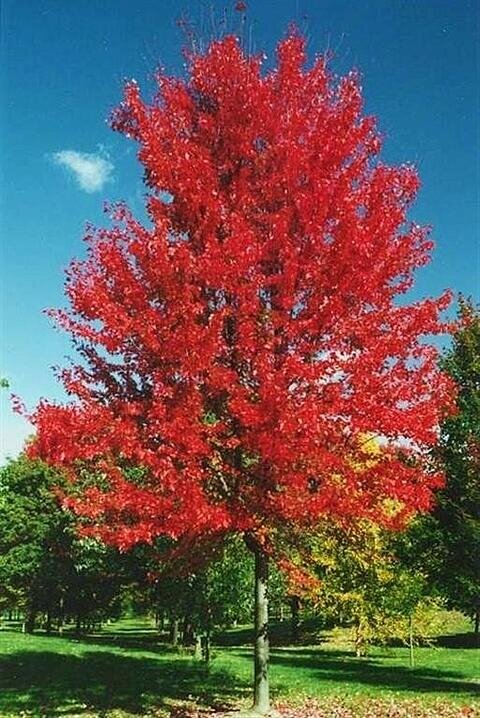
When people are shopping for a shade tree, they almost always ask me what I think of Autumn Blase Maples.  My first thought is always, WOW, another one.....those must have been marketed like crazy at some point!  Truth be told, it would be one of the last trees I would plant in my yard.  

First, a little science and a little history.  Silver maple (Acer saccharinum) and red maple (Acer rubrum) flower at the same time and can cross pollinate.  The resulting tree is a naturally occurring hybrid referred to as freeman maple (Acer x freemanii).  Before I get into the specifics of the Autumn Blaze Freeman Maple, it will help to understands it's heritage.

file_19_1-2.jpg

First the Silver Maple

  • Fast growing.  

  • They are often referred to as a soft maple because they damage easily in wind storms.

  • Yellow fall color.  

  • Easily grown in urban soils. 

    • Tolerant of higher alkaline levels.

    • Toleralnt of lower oxygen levels.

  • Native to Wisconsin.

Red Maples

  • Red maples are slower growing.  

  • Troubles with low oxygen levels and higher PH of urban soils.  Soil PH above 6.5 will cause the leaves to become lighter in color.

  • Less damage in wind storms.

  • Red fall color.

  • Native to Wisconsin.

Autumn Blaze Freeman Maple was the first freeman maple marketed which is one reason I believe it is so well known.

  • It was believed to have the fast growing attributes of the silver maple but the stronger wood of the red maple.

  • Will tolerate urban soils.

    • Tolerates the alkaline soils of urban areas and of Southern Wisconsin.

    • Tolerates low oxygen levels of urban soils and soils from recent construction.

  • Red Fall Color

The problem is Autumn Blaze Maples do suffer from storm damage easily.  With the silver maple and the autumn blaze maple, this is not necessarily from weak wood but from acute branching angles that cause bark inclusion.  When bark becomes included, there is less wood in the connection between the branch and main stem causing a weakness (See the image below).  The branch on the left is closer to 90 degrees and is strong.  The branch angle on the right is narrow (acute), resulting in the bark becoming included resulting in a weak branch.  Proper pruning when the trees are young can limit this problem, but it will not eliminate it.

p18-2.gif

There are very good freeman maple alternatives.  The varieties Autumn Fantasy and Sienna Glenn  have the same fast growing attributes of the silver maple, but better branching habits and the fall color of the red maple.  They are both tolerant of urban soils.

Ultimately, autumn blaze maple is popular and well known.  Many of my customers inquire about them.  It does grow fast and has a nice, red fall coloring, but the narrow (acute) branching habit makes the variety prone to storm damage.  Varieties such as autumn fantasy or sienna glen have the same desirable attributes, but have better form and therefore incur less storm damage.

Eastern Redbud

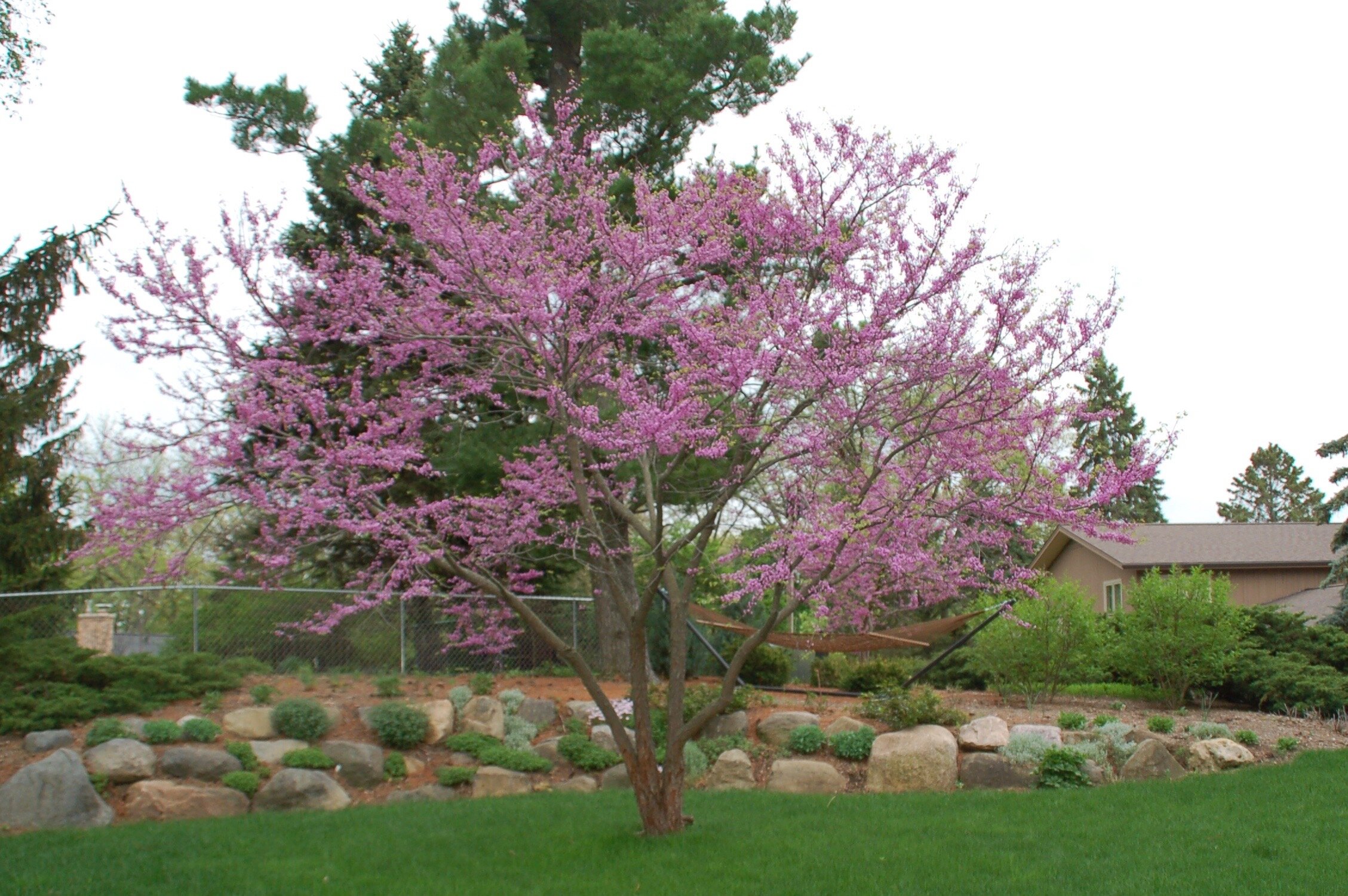
Eastern Redbud (Latin name Cercis canadensis) is amazing when it flowers. The flowers are a beautiful magenta-red that run up and down the trees branches.   It is one of the first plants to flower in the spring; before the leaves come out.  In southern Wisconsin it flowers end of April or early May.  It is native to eastern United States and Canada.  The tree produces multi-seeded pods in summer.  They look like pea pods as the plant is in the pea or Legume family.

DSC_0048.jpg

It is edibleIt is said that Native Americans ate redbud flowers and the young pods either raw or cooked.  The flowers are high in Vitamin C and can be used as a condiment on salads. The unopened buds can be pickled or used as a caper substitute. The seed is about 25% protein, 8% fat and 3% ash.  A study done in 2006 shows the flowers and the seeds to be very high in antioxidants as well as linoleic and alha-linolenic acid.  The seeds also have oleic and palmitic acids. (Green, Deane. Eastern Red Bud: Pea Pods Tree; http://www.eattheweeds.com/eastern-red-bud-pea-pods-on-a-tree/).

The seed pods are best fresh.  They should be cooked  and flavored with olive oil and a splash of vinegar.  Seedpods quickly turn too astringent to eat if left on the tree too long.  Sample one and you'll expereince all of your salvia drying up in your mouth. (Richey: Redbuds both beautiful, edible; Urban Forager; March 27, 2011; http://onlineathens.com/stories/032711/liv_805965171.shtml#.WQNM6lPyvdQ)

You can also prepare the seedpods in butter just like peas!

The trees flowers are also great for pollinators as they aide bees in their honey production.

The tree gets to be about 20' tall and slightly wider than its height giving it a nice round shape.  It has graceful arching branches.  A very nice mature form.

It does best in full to partial sun and well drained soil.  

Eastern Redbud is beautiful ornamental landscape tree for your home.  It has added benefits of being edible.  Please feel free to contact me if you have any questions.

Landscape Planting Design

One of the best compliments I can get from someone about a project of mine is when I am told they love their yard.  We love the spaces.  We love to be outside and use the yard.  There is always something flowering. Our house/ yard looks great.  

This does not happen by accident.  I do believe garden design or yard design needs to be done holistically.  A designer needs to consider how the yard will be used and to create harmonious functional spaces incorporating all elements including patios, pergolas, swimming pools, front walks, driveways, yard space and plantings.  Landscape planting design can be one of the more difficult aspects to garden design.  One issue is most customers want low to no maintenance.  But, they also want interest at all times with sequences of flowering, fall color and winter interest.  As a licensed Landscape Architect and a Horticulturist, what are my guiding principles to planting design?

DSC_0595.jpg

Create a Setting and Develop Buffers.  Plants are great at creating a setting. My first step in planting design is to locate views to buffer and think about major plants to frame the house and create great spaces to be in.  An oak tree can provide a great canopy to sit under.  Or a Juneberry planted adjacent to the front walk not only can help frame the house but can develop a living arbor to walk under.  A few well placed evergreens can screen the view of a telephone pole, annoying street light, or provide visual privacy from your neighbors deck.

In general, I like to keep front yard planting simple.

  • Frame the house and the front door.  

  • Include some evergreen.

  • Allow for areas for annual color.  

  • Avoid areas that will be muddy in the winter.  

  • Use plants that have strong seasonal interests. 

The picture below is from a project early in my career, but still one of my favorites.  It is formal but it illustrates the concepts well.

Front Facade.jpg

Planting in the back yard should create a setting around the house and the seating areas.  Shade trees not only shade the home and can affect heating and cooling of your house but offer a great place to sit under.  Ornamental trees like flowering crab apples offer stunning spring flowers and can soften views you don't like.  Perennials and shrubs will soften the house and hardscape while providing constant variety of flowers and blooming.

The original Green Industry!  How you can Affect the Environment of Your Home and Property.  Shade trees, with proper species selection, can shade roofs in the summer reducing air conditioning needed and keep your garage cooler.  When leaves are lost in the winter sun can still warm the house.  Groupings of trees can be used to create wind blocks and prevent snow drifting across driveways.  Rain gardens can be used to encourage water infiltration reducing the burden on city storm sewers and assisting in keeping lakes cleaner.  I haven't even mentioned providing cover and habitat for our furry and feathered friends.  They love the berries too.  And after the bees pollinate the Black-Eyed-Susans the birds eat the seeds.

Keeping Maintenance to a Minimum.  Easy curving plant beds are easy to mow along.  It is always my goal to plan for a now edge trimmer yard!  Eliminating big open plant beds and planting full plant beds reduce weeds.  Placing flowers where you see them will reduce the amount planting space and maximize the flowers affect.  A perennial garden on the side of your house may rarely be seen, but placed along the back border where you see it from your kitchen window will provide much more pleasure.

Layered Planting.jpg

Other Considerations.

  • Soil type.

  • Light conditions.

  • Layers of plants with tallest in back.

  • Edible plants.  Juneberry for an ornamental tree, strawberry for a groundcover, or blueberries as a foundation shrub.  Yum!

  • Flower smells.

  • Fall color.

  • Winter interest isn't only evergreen.  How about berries, bark color, snow on branches or even a place to have holiday lights.

  • Wildlife as noted above. 

  • Allergies.

Lewis.jpg

Having a great looking yard doesn't happen by accident.  Thought and planning will provide a setting for your house and outdoor spaces.  Plants can help affect your immediate environment as well as our world's environment.  There are many things to consider.  Please feel free to contact me if I can be of assistance with your yard.

Brick Paver Patio Problems and Solutions

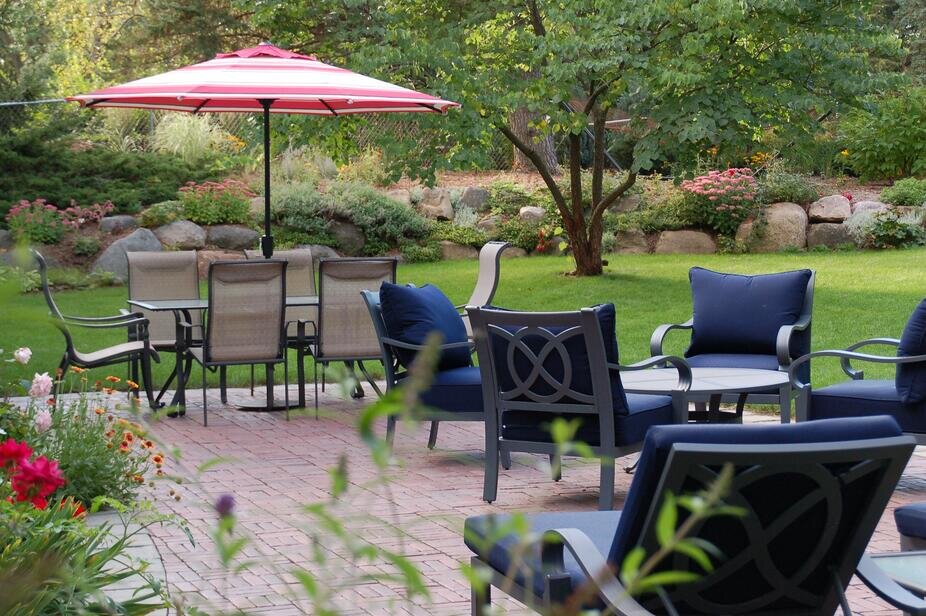
I love my brick patio.  It is colorful adding warm tones in the summer and winter.  It gave us great additional space for us and for entertaining.  I think our brick patio is beautiful.  We have had no issues with it.  No heaving or sinking of bricks.  No ants, no weeds.  Naturally Landscape Architecture installed my patio.  It was properly constructed.  It will last for 20-30 years adding beauty and enjoyment to out yard.  When I meet with customers I frequently get asked about what can go wrong with paver patios.  More importantly, what can you do to avoid the problems.

First and foremost, proper patio installation and quality materials will prevent issues.  Hiring a quality contractor is very important.  You can read reviews on contractors or get a referral from friends. Definitely hire a company that offers a warranty.  Landscape Architecture offers a 5 Year Workmanship Warranty on all hardscapes.  Some paver manufactures qualify contractors too.  Unilock for example, has an Authorized Contractor Program.  Landscape Architecture is a Unilock Authorized Contractor.  

With quality construction, you should experience none of the issues below.  But if you do, and you hired a quality contractor, the issue should be fixed with no hassle.

DSC_0579.jpg

What are the most common problems?

Settling, Sinking or Puddling.  Many customers express a concern that a paver patio will have areas that settle or sink.  This is usually caused from an improper or poorly compacted base.  Or, from water running from a downspout or other source.  

The great thing about brick pavers is they are easy to fix.  This same problem, with a concrete patio, would likely mean a crack.  The only solution to cracked concrete is a difficult redo or a patch that does not match.

The best solution is hiring a quality contractor that offers a warranty.  If the settling exceeds the standards set by the International Concrete Paver Institute (ICPI), then this should be repaired by the contractor if it occurs during the warranty period.  The good news is 90% of these issues will happen in the first year.

If you are in the design or planning stage now, make sure drains are planned under downspouts.  Ask potential contractors how they prepare there base.  How many inches of gravel?  How often do you compact?  

Fading.  Concrete pavers are made from a portland cement, aggregate, water and color.  Most pavers have color throughout the entire paver.  But, as the surface wears it exposes the aggregate in the concrete giving the paver a faded appearance.

The faded appearance can be addressed by:

  • During the design or planning phase, use a better quality paver.

  • Seal the pavers to protect the surface from the effects of rain.

  • Clay pavers are manufactured from clay and baked.  There is no aggregate to expose as it weathers.

  • Stone paving will not fade. 

  • If your patio is older and this is happening, a rehabilitation can be done by power washing and cleaning the pavers using a paver cleaner. Then the pavers can be sealed. They won't be as good as new, but the results can be very impressive.


Weeds and Ants.  Polymeric sand has solved these problems.  Polymeric sand has polymers and/or portland cement mixed into the sand.  When installed properly the polymeric sand sets up like mortar between the pavers.  Proper installation is very important.  Each manufacturer of polymeric sand has a different procedure for installation.  

Almost all problems and concerns with pavers can be solved before they happen by hiring a quality contractor and by choosing a quality paver.  If you get multiple bids for your project, question the contractors.  Often a higher cost from a contractor is due to the contractor paying attention to the details that will provide a great project for years to come. If you have issues on an older patio or want a new patio contact me.  I would love to help!

What is Better: A Deck or A Patio?

I often get asked the question by customers "What is better, a deck or a patio?"  The answer is not always simple.  Sometimes architecture or terrain will dictate the choice.  Sometimes it is simply personal preference.  There are pros and cons of both patios and decks.  What is better? Read below and hopefully the right choice for you will surface.

Generally decks will cost more than patios.  The difference in cost will depend on slope and terrain and the materials chosen.  

For decks, treated pine is the most affordable, composite materials are middle priced and exotic hardwoods such as Ipe will be the most expensive.  A 10' x 20' deck will range in cost from $6,000 to $12,000 depending on the material.  If railings are needed they can cost an additional $2,000 to $6,000.

Deck with stainless steel cable railing and perennial garden.jpg

Concrete patios will be the most affordable, brick pavers are middle cost and natural stone will be the most expensive. A 10' x 20' patio will range in cost from $1,500 to $12,000.

If your yard has steep hill, a deck will likely be less expensive.  Patios are installed on the ground with a gravel base so a flatter space is required.  A retaining wall may be needed to develop a flat enough space.  A retaining wall/ patio combination can still be more affordable than a deck depending on the height of the wall.  

Patios also tend to be less maintenance than decks.  Again this depends on materials.  Treated pine decks are more maintenance than composite decks.  But composite decks can still mold and mildew so need regular cleaning.  Concrete patios may be the least maintenance.  Partly because somethings like cracked concrete are not repairable.  Properly installed brick and stone patios require very little work.

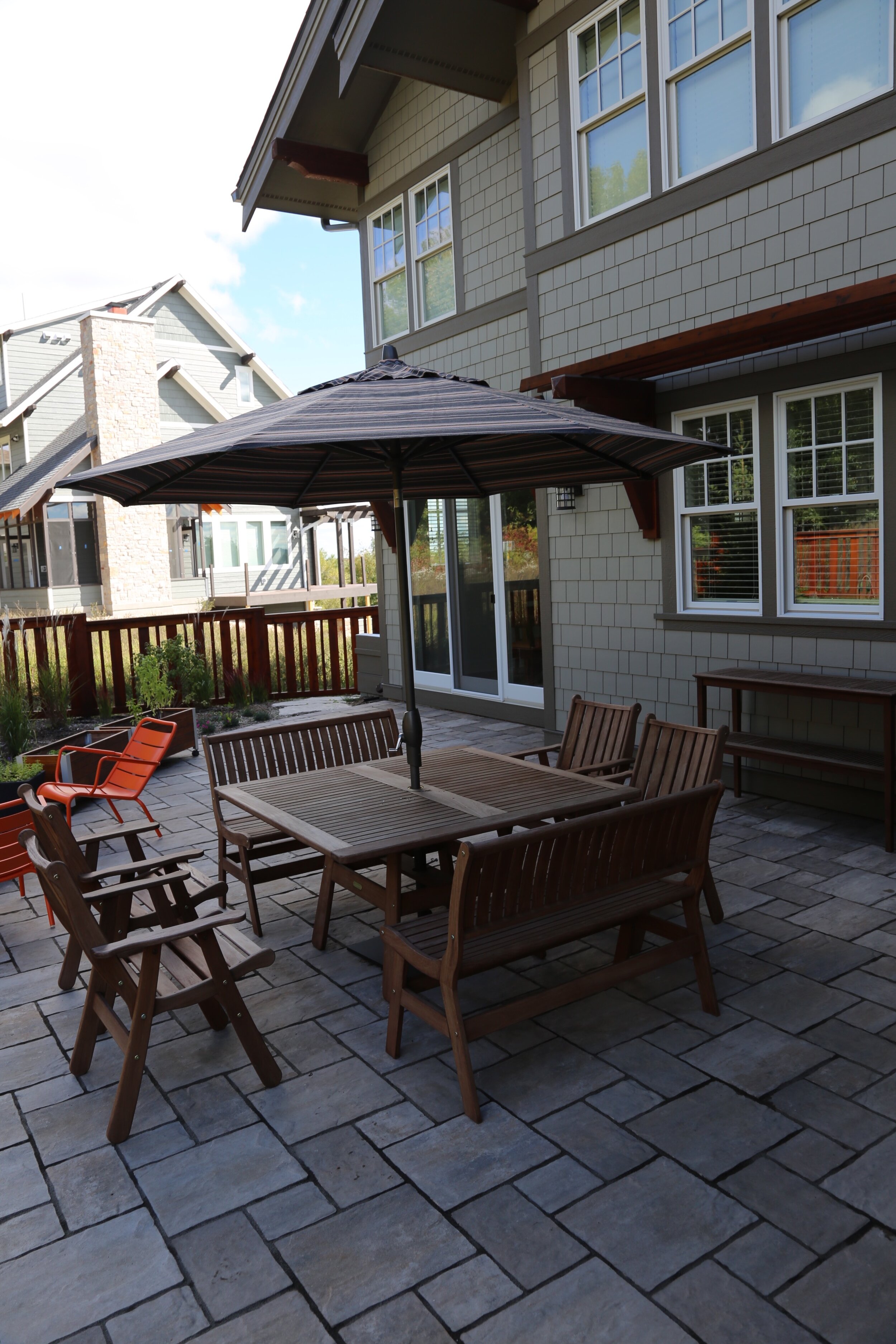
Patios are easier to customize.  You can be creative with both decks and patios using a variety of materials and creating colors or banding.  There are more patio design options.  Pavers are now available with different surfaces including aggregates of granite and quartz.  It is very easy to install a curved patio.  Decks tend to be rectangular since is difficult and costly to curve a them.  Also, other elements such as pergolas, fire pits or outdoor kitchens are more easily integrated into a patio.

1G6A7205.jpg

Decks also have more critters.  Animals often live under decks.  Screening or hardware cloth can be installed and buried under the deck to limit this.  Patios, when installed correctly should have no problems with critters, ants or weeds.  But, when a patio is installed improperly ants or weeds could be an issue.

In all municipalities I have worked in, decks require a permit.  Patios generally do not require a permit, however check your municipality.    Even if a permit is not required there may be zoning limitations. Decks will have set back requirements.  Patios may have impermeable surface limitations, if so you may consider permeable patio.  

The question of what is better, a deck or patio is not straight forward.  I have found when answering the question most people will opt for a patio since they tend to be less expensive and less maintenance.  Please feel free to contact me if you I can assist you with your project.