
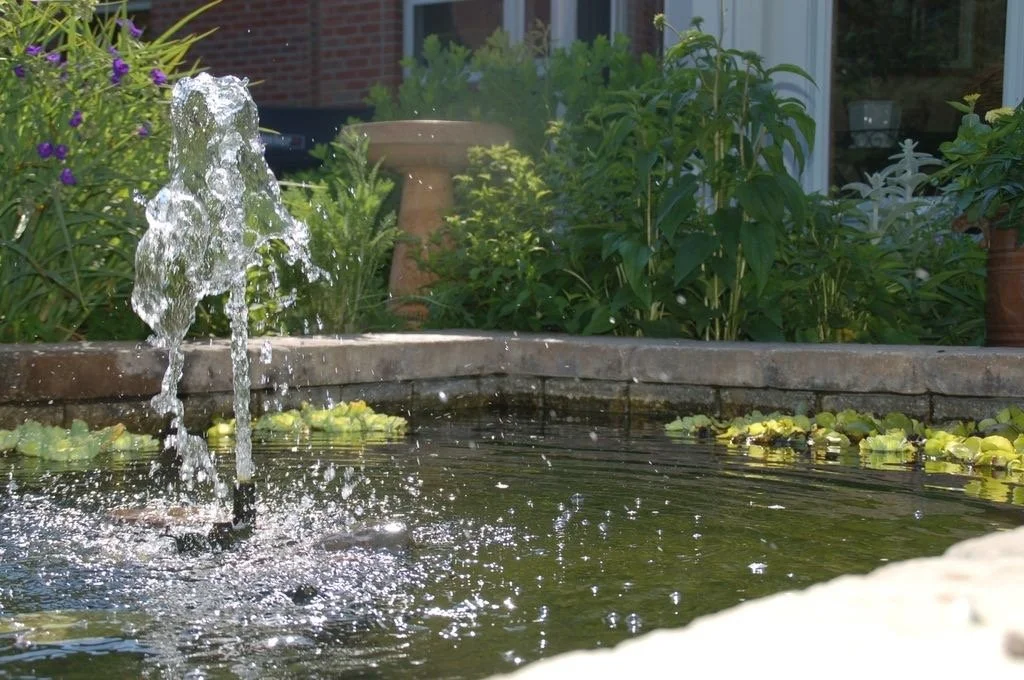
A pond draws the eye immediately. The sound of water, the movement on the surface, and the way light shifts across it through the day are all part of why homeowners across Fitchburg, WI, pursue them. But a pond that only looks good and a pond that truly performs are not the same thing. The difference shows up not at installation but over the seasons that follow.
As the water settles into the ecosystem around it, the design choices made before the first shovel broke ground either pay off or begin creating problems that compound year after year.
Landscape Architecture, LLC has been designing and building custom water features in the Madison and Dane County area for over 25 years.The pond projects that hold up and continue to delight homeowners year after year share a common trait: they were designed with function and ecology in mind alongside aesthetics, not as an afterthought once the visual concept was finalized.
Let’s explore what that means in practice, from site selection and sizing to plant integration, filtration, seasonal performance in Wisconsin's climate, and how a professionally designed pond fits into a complete outdoor living environment.
What Are the Most Important Decisions When Designing a Pond in Fitchburg, WI?
The decisions that matter most in pond design are made before any excavation begins. Location is the first and most consequential variable.
A pond placed in full sun encourages aggressive algae growth and raises water temperatures to levels that stress fish and aquatic plants. The ideal placement captures morning sun and afternoon shade, which moderates temperature swings and supports a more stable ecosystem throughout the summer months.
A pond placed in deep shade presents a different problem. Aquatic plants are deprived of the light they need to photosynthesize and keep the water balanced.
The right balance of light exposure is one of the most site-specific decisions in the entire design process. No formula replaces an on-site assessment by someone familiar with how Wisconsin sun angles and seasonal variation affect water temperature across a full year.
Accounting for Trees and Root Systems
Proximity to large trees creates its own set of considerations. Leaf litter accumulates on the water's surface and decomposes, elevating nutrient levels and contributing to water quality issues over time.
Root systems can also compromise the liner or structural elements of the pond as they expand. The combination of surface debris and subsurface root pressure makes mature tree proximity one of the most underestimated site variables in residential pond planning.
Identifying mature trees near the installation site early in the design process allows the layout to account for these factors rather than discover them after the fact. Discovering them after installation is a far more costly correction.
A site assessment done at the design stage protects the investment before any ground is broken. When site constraints are identified early, the design team has the flexibility to adjust placement, specify protective liner systems, or recommend screening plantings that reduce debris accumulation.
How Size and Depth Shape Long-Term Performance
Pond size affects nearly every downstream performance variable. Larger water volumes stay more thermally stable, resist algae blooms more effectively, and support healthier fish populations than smaller ones.
A pond too small for its setting struggles to maintain water quality and requires more frequent intervention to stay balanced. The relationship between water volume and surface area also affects evaporation rates, which is a real consideration during Wisconsin's drier summer stretches.
Depth Requirements for Wisconsin Climates
In Wisconsin, where summer heat and winter freeze are both genuine stressors, a water volume that provides thermal buffering is a functional requirement, not a luxury.
A pond designed to overwinter fish in the Mt. Horeb, WI area needs a deep zone, typically at least 18 to 24 inches below the frost line, where water temperature stays above freezing even when the surface ices over.
Without adequate depth, fish survival through a Wisconsin winter becomes uncertain. The deep zone also provides refuge during summer heat events, giving fish and beneficial organisms a cooler habitat when surface temperatures rise.
Matching Pond Specifications to Homeowner Goals
A well-proportioned residential pond in Fitchburg typically ranges from 200 to 1,000 square feet of surface area depending on the scale of the landscape and the homeowner's goals.
A pond intended primarily for Koi requires different depth, filtration, and plant ratios than one designed as a naturalistic water garden with native species and minimal fish stocking.
Establishing those goals clearly at the outset prevents the kind of specification mismatch that leads to ongoing maintenance frustration. It also ensures the design conversation begins with the right questions rather than assumptions borrowed from a different type of project.
How Does Ecology Play a Role in a Well-Designed Pond?
The most durable and lowest-maintenance ponds function as genuine ecosystems rather than decorative containers. When the biological components are in balance, including the right ratio of plants to water volume, appropriate fish stocking levels, functional filtration, and beneficial microbial activity, the system becomes largely self-regulating.
Algae growth stays in check, water clarity is maintained, and oxygen levels remain consistent. The pond does not require constant chemical intervention because it is doing the biological work itself.
The Role of Aquatic Plants
Aquatic plants are the most powerful tool in achieving ecological balance. Submerged plants like Anacharis oxygenate the water and compete with algae for nutrients. Marginal plants like native sedges, Pickerelweed, and Blue Flag Iris filter runoff, stabilize the pond edge, and attract pollinators and beneficial insects to the surrounding landscape. Each plant category serves a distinct function, and a complete planting plan incorporates all three tiers.
Floating plants like Water Hyacinth and native Water Lilies shade the surface and limit the light availability that algae depend on to establish. A plant palette selected for Dane County's growing conditions and staggered for seasonal coverage produces a pond that looks intentional and alive from spring through fall.
Choosing plants native to or well-adapted for southern Wisconsin also reduces the maintenance burden by eliminating species that struggle through local winters. Native selections also support the broader ecological health of the property by providing habitat and food sources for birds, butterflies, and beneficial insects.
Filtration Systems and Water Quality
Even a well-planted pond benefits from mechanical and biological filtration. Mechanical filtration removes suspended particles that cloud the water. Biological filtration supports colonies of beneficial bacteria that convert fish waste and decomposing organic material into forms that plants can readily absorb. Together, these systems reduce the maintenance burden on the homeowner and extend the intervals between cleanings.
The filtration system should be sized for the pond's actual water volume and fish load, not the minimum specification. An undersized filter in a pond with a significant fish population is one of the most common causes of chronic water quality issues that homeowners bring to professional landscapers for correction. Getting this right at the design stage prevents an entire category of long-term problems. A properly sized and maintained filtration system is what separates a pond that stays clear and balanced from one that requires constant attention.
Beneficial bacteria products added at the start of each season and after any significant water change accelerate the biological cycling process. This shortens the period between startup and a balanced, clear ecosystem. In Wisconsin, where the outdoor season is short, every week of clear and healthy water matters. Establishing the biological cycle quickly in spring means more time enjoying the pond and less time managing it.
Related: What to Expect from Leading Pond & Landscaping Companies in Verona, WI
What Role Does a Pond Play in a Complete Outdoor Living Environment?
A pond designed in isolation from the surrounding landscape misses its most significant opportunity. When integrated into a cohesive outdoor living plan, positioned to be visible from the patio or kitchen window, connected to the landscape through plantings that frame and complement it, and lit to extend its visual presence into the evening, a pond becomes an organizing feature that elevates the entire property. It stops being a standalone element and starts being what the rest of the outdoor environment orients around.
Connecting the Pond to Hardscape and Softscape
In Mt. Horeb and across Dane County, the most successful pond installations are planned alongside the broader hardscape and softscape design.
The pond's edge treatment transitions naturally into surrounding plantings, walkways, and seating areas. The sound of the waterfall or stream reaches the outdoor gathering space. The visual axis from the home connects to the pond's focal point rather than a fence line or neighboring property.
These connections do not happen by accident. They require the kind of integrated design thinking that landscape architecture brings to the process. When a pond is designed as part of the landscape rather than added to it, the result reads as though it was always meant to be there.
The surrounding plantings frame the water, the hardscape transitions feel natural, and the entire outdoor environment functions as a single cohesive space rather than a collection of separate features.
How Waterfalls and Streams Amplify the Experience
A still pond produces visual interest. A pond with a waterfall or recirculating stream produces an entirely different sensory experience. The sound of moving water is one of the most effective ways to create a sense of calm and separation from the surrounding neighborhood. This carries particular value in Fitchburg's residential neighborhoods where properties sit in close proximity to one another.
Waterfalls also serve a functional purpose. The movement they create oxygenates the water, supporting fish health and reducing the conditions that favor algae. The cascade over natural stone or boulders can be designed to look as though it has always been there, creating the impression of a natural spring rather than an engineered feature. This is where the artistry of a professional landscape designer distinguishes a finished project from one that simply looks constructed.
Recirculating streams extend the sensory experience further into the landscape and allow the design to address grade changes in a natural-looking way. A stream that travels from an upper basin across a planted slope and into a lower pond creates visual movement, sound, and ecological interest across a much larger portion of the property.
The additional water surface also increases oxygenation and provides more planting opportunities along the stream edge. Each of these functional benefits compounds the aesthetic value of the feature.
How Does a Pond Perform Through Wisconsin's Four Seasons?

Spring and Summer: Peak Activity and Visual Impact
A pond in Fitchburg, WI, is not a summer-only feature. Spring brings the return of aquatic life, the emergence of marginal plants, and the reactivation of the ecosystem after winter dormancy. Summer is the peak visual period, with full plant growth, active fish, and the rich green and bloom colors that define a thriving water garden.
Each season contributes something distinct to the pond's presence in the landscape, and a well-designed installation rewards the homeowner year-round rather than only during the warmest months.
Fall: A Different Kind of Beauty
Fall introduces a different kind of beauty. The reflection of changing leaf color on the water's surface and the transition of the surrounding landscape into warm tones frame the pond in ways that summer plantings never deliver.
As marginal plants take on seasonal color and the surrounding deciduous trees shift, the pond becomes part of a larger autumn composition. This seasonal layering is one of the design qualities that distinguishes a professionally planned pond from one that was installed purely for summer enjoyment.
Winter: Aesthetic Contribution Through the Cold Months
Winter, rather than ending the pond's contribution to the landscape, creates its own aesthetic. Ice formation patterns, the persistence of ornamental grasses at the water's edge, and the clean lines of the hardscape elements that define the pond's perimeter all read differently under snow and against bare deciduous plantings.
A pond that is well-integrated into the broader landscape design continues to contribute visual interest through even the coldest Wisconsin months.
Preparing a Pond for Wisconsin Winters
Proper winterization protects the investment and ensures a strong return to function in spring. Fish should be given time to enter their winter slow-down mode before water temperatures drop dramatically.
Leaf netting installed before peak fall drop prevents organic accumulation that would otherwise decompose under the ice and compromise water quality. These two steps alone eliminate the majority of the problems that surface at spring startup.
A de-icer or aerator maintains a small open area on the surface to allow gas exchange, which is critical for fish survival through extended cold periods. Biological filtration slows significantly as water temperatures fall below 50 degrees Fahrenheit, which means feeding should be reduced and eventually stopped to prevent uneaten food from decomposing in the water. Pumps and equipment should be evaluated annually for cold-weather operation.
A professional maintenance relationship ensures these steps happen on the right schedule and that any issues identified in fall are addressed before the ground freezes.
What Should Homeowners Expect From the Pond Design and Build Process?
The design process for a custom pond begins with a site assessment that evaluates sun exposure, drainage patterns, existing plantings, proximity to the home, and the homeowner's goals for how the feature will be used and maintained.
That assessment informs a design that specifies size, depth, edge treatment, plant palette, filtration, and any accompanying features like waterfalls or streams. The homeowner sees the full concept before construction begins, which allows for meaningful adjustments when they are still easy to make. Changes are far less costly at the design stage than they are after excavation is complete.
What Landscape Architecture, LLC Brings to Every Project
Landscape Architecture, LLC brings over 25 years of water feature experience to every project in the Fitchburg and Dane County area. All hardscape installations carry an exclusive five-year warranty that reflects the confidence the firm places in its workmanship and materials.
The firm's ASLA certification and longstanding Unilock partnership mean that every element of the design, from the pond's stone edging to the surrounding patio and plantings, meets the same standard of quality and integration. That standard has defined Landscape Architecture, LLC projects across southern Wisconsin for decades.
Many of the firm's designs have been named finalists in the Unilock Awards of Excellence. Owner Joe Hanauer has been recognized nationally for his approach to design, technology, and sustainable practice.
The firm's commitment to sustainable design, including permeable pavers and water conservation principles, aligns naturally with the ecological goals that make a pond perform well long-term. When you bring a pond project to Landscape Architecture, LLC, you bring it to a team that has built hundreds of successful water features and understands exactly what makes them last.
If you’ve been considering a pond for your property and want to understand what a professionally designed and built installation delivers, contact Landscape Architecture, LLC to schedule a consultation and begin the design conversation.
Related: Transforming Outdoor Spaces: Expert Pond Installation and Landscape Services in Madison, WI
